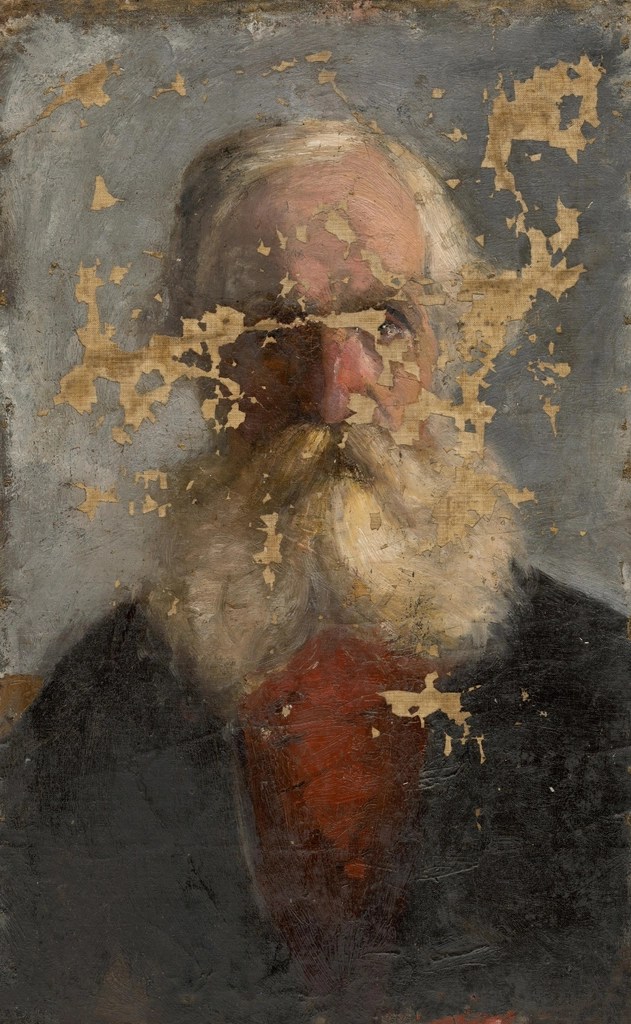
Into the foothills of the north country, we wandered,
to toil in soil, to unearth stone and to give it birth anew
upon the plowed fields where many a dead farmer spent
his hours gazing outward and hopeward of what the next day might bring.
Into the sun as it kissed the clouds silver and tongued the sky blue.
My brethren spoke Spanish to me in a slow, patient way,
waiting for me to stutter back in my stubborn English.
But we smiled as we tucked our shovels into the bed of
the rolling green hills and killed the grass and shooed
the toads and crickets back into the thickets away from spade and rake.
And we brethren, walked widely and worked slowly around that tanned,
deaf man, whose work was iron-willed and impatient,
whose blue eyes both feared and warmed those who stared back;
Mirrors to whom you were and what you feared you’d always been.
He never heard me speak, his hearing aid never truly worked.
He only barked at where to unload the gravel, where the soil needed to be flattened,
where the rubble needed to pitch downward. He willed greatness from us in a reluctant manner,
through thick hands that made marble chip. He poured our greatness,
our marrow, back into the earth and we hated him for it, we all did.
In their Spanish giggles, they called him ogro gruñon, the grumpy ogre.
His face was leather beaten by the outdoor sun and square shovels.
By black mulch and gray gravel, by green grass and brown sand,
by thick sweat and old boots. He walked away when it was time to eat.
He ate nothing but slept, and woke ready to unburden Atlas.
When we left the rolling hills, eternal in their forgotten pastures,
as the crickets of the evening began to sing and the sun’s head got heavy,
I drove home with him in a large red work truck. He growled without
sound as his palms dwarfed the five-ton truck, and he drove
through the foothills as though the road would flatten and unbend before him.
I thought, he truly was an “ogro gruñon,” as the wind whipped into the truck
and blew our sweat-filled air into the atmosphere.
But I am certain, through the patience of time and shovels scooped full of soil and gravel,
through the softening of his steel frame and grinding, flattened fangs,
that he would go home and take off his ancient boots.
He would cuff up his work pants, slap out their dust,
and walk into the front door where he would purse his lips and whistle, his blue eyes smiling.
A cockatoo would whistle back and raise its crest feathers, and dance in its cage.
The two ould whistle to each other in their co-solitude,
and the ogro would uncage the bird and place him on his shoulder,
where the moonlight would bless them in its darkness.

