Blacks and yellows and reds stained his palms like the vomit of the universe. Diego Velazquez’s hands were covered in paint. It was a habit of procrastination to paint his hands, for when his subjects were…confusing him. It wasn’t exactly that he didn’t like this subject―a subject to which he actually was a subject; he was painting the holy monarch of Spain, King Philip IV.
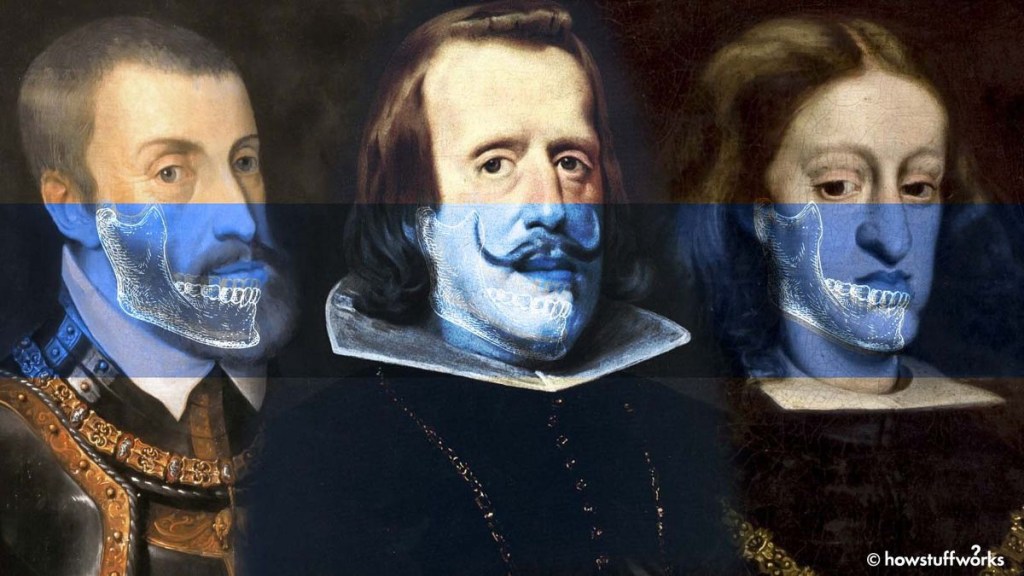
The king had been a friend. More than a friend, a supporter, a lover of the arts, a lover of his art. And yet…that chin, it prodded at some dark uncertainty in Diego’s heart. That satan’s cliff stuck out from beneath that nose―made that great big beak seem like a pimple on an elephant’s backside in comparison to that chin. The chin was like a well hole, the way it stuck out, wet and black for anyone to fall into. The chin was a royal heirloom from the glorious genetics of the Hapsburgs themselves―they had used those underbites to eat every throne in Europe like a swarm of leeches to the drowning swimmer. It was an amalgamation of purity to a fault. Too much purity decays into something fallible, into something inbred.
But that being said, he argued with himself to ignore that doubt in his belly, that the subject of the king wasn’t the end of the world. If anything it was the seedling of his growth within the Spanish world of art and culture.
Diego shifted the paintbrush in his hands with anxiety. Why was his hesitation so…irremovable? So obtuse and intrusive. It couldn’t only be that horrendous chin could it?
He stared at the paint on his knuckles in impatient silence. The feeling of skull-buzzing doubt brought him to an old memory: he could see his grandmother on her knees in the old back garden. Her skirts flailed around her as she bent over a plot of mud and green before her. She was fiddling with the plants in the dirt, and as he approached her, a little boy, she looked to him with a weary smile―of her toil and of her long years. Her thick black hair danced in a summer kiss of breeze.
“Weeds invade a good thing that grows,” she had told him. The damned invaders overlapped and intermingled with one another, becoming one squirming mass of putrid green that got into everything. He could see the green baying within her palms, like hellish silent things left to breed too long in the sun. She yanked at them with bitten lip and furrowed brow. He went to help her, and they pulled the root together falling backward. They had giggled with the sunshine. Diego had that same frustration needling between his brows, the same way his grandmother had wrestled with the weeds in her vegetable garden with defiance and contempt.
That memory stayed with him as he stared at the splotchy white canvas in front of him, a face almost defined, like a ghost peeking through the ether’s window.
“Diego,” the king’s voice beckoned him, its lisp weighed down by a driveling tongue that hung like a fat snake in the dark well of that mouth.
“Yes, Your Highness?” the painter was able to mumble through lips that moved hardly at all, hardly opened in contrast to that bloated jaw, that open, dark well beneath the king’s nose.
“Is everything quite alright? Are you almost finished with the sketch? I have a council and some sword training to attend to, dear man,” the king spoke, that oblong jaw making each word stumble over the fence of his teeth.
“Yes, my lord, but a moment more, if you’d be so kind.”
“Of course, Diego, of course.”
What knitted the painter’s brows with pain was the ebbing flow of calm kindness, poise, and restraint that issued out from those dead, beady eyes and that cavernous underbite. It was a kindness that Diego suddenly resented, though for no clear reason could he understand why. It was something about his grandmother, that old secret of the family that weighed on his thoughts like an anvil.
Diego focused on the sketch before him and marked the painting in places which let him avoid painting the king’s chin… should he show how it jutted out rudely into the empty space of the room? The king sat before him in fake tin armor of red and black and gold. Dark colors that heightened the absolute whiteness of his complexion.
“How is the fairness of my skin coming out dear Diego?”
That damned voice, that harrowing soft kindness droning out like the most delicate of flies, words like kind drunkards patting his ears too harshly. Why did he hate it so? The owner of that voice who had seen Diego―some low class painter whose artistic contributions had been limited to painting lives of old women frying eggs and stumbling men shoving lunch into their mouths. Diego was hardly the portrayer of lords nor kings nor emperors…Certainly not emperors from that ancient family, that family with the chin whose tentacles, green and greedy, had wriggled into every seat in the European menagerie of monarchy. But the pay was good, the renown even better. It was an honor to be here, he tried to tell himself over that loud, buzzing doubt.
“Pure, Your Majesty. Like white clouds on a summer’s day,” Diego mumbled to the king, staring at his painting’s hollow eyes, hollow eyes of rulers, dominators, enforcers―inquisitors.
And then he remembered what that anvil weighing on his memory was; it fell like a comet from the white stars of summer onto his tongue: His grandmother sitting there in the garden. Her Spanish always slightly tainted with its hint of Portuguese, her hair always thicker, more curly, than the Portuguese and Spaniards he had known. She wept coldly while she molded and forged over her vegetable garden mile by microscopic mile. How his grandfather had stood over her and uttered a reprimanding word about identity, about staying hidden. But how even through the rough scalding of his voice, there was that kindness in his eyes that harmonized underneath his apparent cruelty. And Diego realized it wasn’t truly cruelty, but fear was in his voice.
He remembered how the sunlight seemed to scream its serene light as his grandparents faced each other in the shade of the home, a private scolding between loving husband and loving wife, both had verged into tears. It was but a single word he had heard as a boy so many years ago, “judíos.” Jews. Diego paused and looked again at the king sitting before him, modeling in the tin armor.
Those soft words of compliment and purity which had been uttered from this Hapsburg king were no longer the words of a monarch who believed in his work, who saw beauty in his subtle mastery of tenebrism―how light and dark were kissing sisters that brought paint into truthful second realities, but the son of fathers who had implemented hatred in the courts of Spain and Portugal, the enforcers of the Inquisition, the master-torturers of Jews. The king sat here letting people like his grandmother be split into a thousand pieces while he maintained that his sallowy, stinking skin be as pale as the rotten bones he had helped put into the earth.
Diego’s teeth clenched as he adjusted his brush, he ran the paint over his fingers again, the liquid drenching into his nail beds, down his palms and onto his wrists.
“Oh enough, Diego,” that sneering kingly mouth, utterer of pain and death in Iberia, protruded into the silence. “I shall have a look at it.” King Philip IV rose from his seated position and clinked over in the faulty tin armor and stood beside this dirty grandson of converso grandparents turned courtroom painter.
“Diego! My friend, it looks like it will be excellent. You will outdo yourself again. I am sure you will finish it up to perfection.” Some of the king’s staff came up next to him to glance upon their king in painting form.
“Perfection, Señor.”
“Excellent, a mirror image of the king, truly.”
Not a single person walked away without approval of the unfinished sketching, this model first draft. Coinage was put into Diego’s hands, and the king looked at Diego.
He was suddenly repulsed by the king’s visage, this disheveled slant-faced glare, that culture killing, religious fanaticism of inbred royalty, that slack-jawed jew-killer and his whole thick-blooded line of Hapsburg filth.
“Your Majesty, to paint your face is truly my honor, my lord,” and Diego bowed so heavily, his own lips almost kissed the king’s small, black leather shoes, in fact, the bristles of his mustache almost wiped the dirt from them.
“Please, Diego,” the king lifted the painter from his deep bow and raised him to his eyes. “You are the master of the brush, the honor is in sitting before you, my friend,” and those damned beady eyes glimmered with solidarity and love. “This painting will far outlive anything I could ever be known for.”
Diego thought of the miles his Portuguese Jewish grandparents had fled, how many miles had collected in the bones of their toes through those steep hills and stark mountains on the Spanish-Portuguese border. All so that they could escape that word that meant death in the kingdoms of Spain and Portugal: judíos. The broken jaws and wills they had seen, piling like clouds in the sky, like guilt in their minds as they trekked away from true identity to create something freeing yet false in the land of Spain, where the kings who hated them would be closer, but where they would hide more snugly beneath royal noses, and perhaps even more safely beneath Hapsburg chins.
He remembered now, unbidden by the shame reflected in the painting before him, the whispers of how his grandparents had fled from Portugal in fear for their lives. The hidden whispers of how they had converted on their Pilgrimage and settled in Spain as true Catholics, keeping their converso origins as hushed, ugly, unwanted children bundled into the basements of their lives.
But his grandparents had converted, they had found life anew, reborn with Christ, Jesus…Diego tried to convince himself as he looked at that gaping jaw of the Habsburg line before him―The kindness of this man before him was real! This king, who had elevated Diego into the ranks of the masters, believed in him. The same king who had come from the killers of his family’s people, whose beliefs put his family story in the dark shame of the closet, who had come from the beds of brother-sister spouses, whose jaw was that dark, wet well he didn’t want to fall into.
A conversion to Jesus is just as beautiful as being born Catholic, Diego told himself, if anything more beautiful. For to be born into something is an obligation, but to convert to something is a surrender, a commitment.
And hadn’t this King Philip IVth fallen into the same prophecy? The same fate of his grandparents? Coming from something unwanted and morphing into something beautiful? No king of Spain had devoted so much to the arts, no king had ever looked upon the fallen crest of the Velázquez line and pulled it up from its meager mediocrity. But this king had.
“I leave you now, Diego,” said the king, “to let you ponder―well―to ponder upon me, or above me, some more!” The royal entourage forced the poor jest into a jousting cackle, and the group left Diego alone with that outline of this Hapsburg monarch staring blankly, palely, up at him. The most unfinished section was the king’s lips and jaw. The maw of uncertainty gripping Diego around his paint-wet fingers like weeds groveling around him with choking intent.
He stared down at the coins. He saw the painting finished: a jaw jutting out like a cliff, like a fallen steeple horizontal and rotten by the fingers of time. Pale skin that contained no ounce of pride, but looked swollen and sallow, a slothish deficit seen only in the hollow coffins which rattle with skull bones. A king of hunched disgust, a line of inbred lust revealed in its pornographic vulgarity, a sock puppet of a king, as crusty and pale as ghouls beneath a child’s bed, as empty and barren as the Estrela Mountains his grandparents hiked in fear and bitterness so many decades ago.
Diego’s eyes closed. Shining suns in the palm of his hands, the purest metal from the unknown land of the Americas, a universe away, to roll across godforsaken lands, across salty ship decks, to fall neatly in his paint-wet hands. The king had the power to move continents, to move worlds. To talk to the Pope, and thus the One Lord Almighty, Jesus. Is this worth the mountain of pride, a pride only remembered to him today, a pride long hidden in black clouds of shame, covered by the rains of half forgotten whispers, and stared back into him through clear mirrors and thick black haired self portraits? The coins glimmered in his hand and he felt the emptiness stir around him like the blank winds that drive in a storm.
His eyes opened, a smile upon his face, a glint of gold reflecting upon his toothy grin from the coins in his hand. He closed his finger, put the gold in his pockets and grabbed the painting to take it to his study.
***
The king and his entourage stood around the painting which was veiled by a royal red cloth. Diego’s portrait was finished. He had had it framed last night, an impromptu informal frame which would get the job done. His anticipation was less about the frame and more about the look upon the king’s face as the red veil would hit the floor. Diego had pride in his work, which made him all the more nervous for the revelation about to occur. He believed in the strokes on the canvas, the only question is whether the king would as well.
“Oh, Diego, I am so excited to see it, truly. The talent in your strokes were magnificent in your first sketching. I am certain it will be remade across the kingdom,” the king spoke, his jaw only a fraction behind his words, leaving that guttural lisp flailing in the air.
“Yes indeed, my lord.”
“Indubitably.”
“Without question, your highness.”
The voices pitter-pattered around in the small reception. For these men in rich cloaks and manicured beards, the center of the world was the very spot on the floor where King Phili IV was standing; its lunar satellite was whatever the king’s eyes beheld. The king, his tongue sticking subtly out of his mouth, looked upon the red veil in front of him, and thus so did the eyes of every other man in the room, besides Diego.
Diego’s head was upon the king’s feet with nervousness, the weight of pontification rolling loudly around in his skull.
“Diego, my friend,” the king said.
The painter shivered in his bones at the word friend. Was it a word he deserved? Would his grandmother, her garden long since grown thick and weedy, approve?
“Diego,” the king started again.
The painter looked up to the king’s eyes.
“Show us,” the black beady eyes, the true core of the Spanish Empire, glared into Diego with anticipation.
Diego pulled the veil down, his eyes staring at the king’s face.
There was silence.
“Oh, my lord.”
“Good God.”
“He’s done it.”
The numerous voices responded to the painting.
“Oh, Diego,” the king muttered, speechless.
The painting was set before them. The portrait of King Philip IV completed. In the painting, the king’s black eyes are larger than in real life, like black pebbles upon white snow, the forehead broad and strong like a knight’s shield, the hair set back and blonde like the gold of Hispaniola. The head is upright and commanding, fit for a crown unplaced upon it. The nose is pronounced and strong like the head of the greatest Iberian war horse. The armor below the king’s neck is of mixed black and gold; black like his solemn devotion to the lord above, and gold like the love of Christ who smiles upon him, yet a sash of red is tied around his shoulder, red like the blood of Spain which the king would defend, and red like the blood he would spill in the name of its people. The skin is pale, royal pale like the kings of old who stepped into the sunlight only for the glory of the battlefield―pale like the foam of the seas his empire conquered with ease―white like the beaches of the new world. Those lips, those red colorful lips are full like the beating heart beneath the portrait, full and most sensually swollen, so that any onlooker would feel the holy kiss of their king, set upon a jaw that was just revealing enough of its deformity to show its beautiful uniqueness―its strong powerful distinction which would iterate the word of the law and God above.
“Oh, Diego,” the king muttered again. “It is perfect.”
The group of men clapped and cheered and surrounded Diego with praise and love. Their words overwhelmed him, and he smiled with deafness, with defeat, with guilty surrender. All he could truly hear as he looked at that Hapsburg chin was the sound of a dark well dripping as it swallowed him whole. He saw his grandmother’s soundless tears rolling down her cheek, and he felt the crowd framing him, especially this pale-jawed king, like weeds choking a garden.
 No Poet Peach