Waiting for your father to move
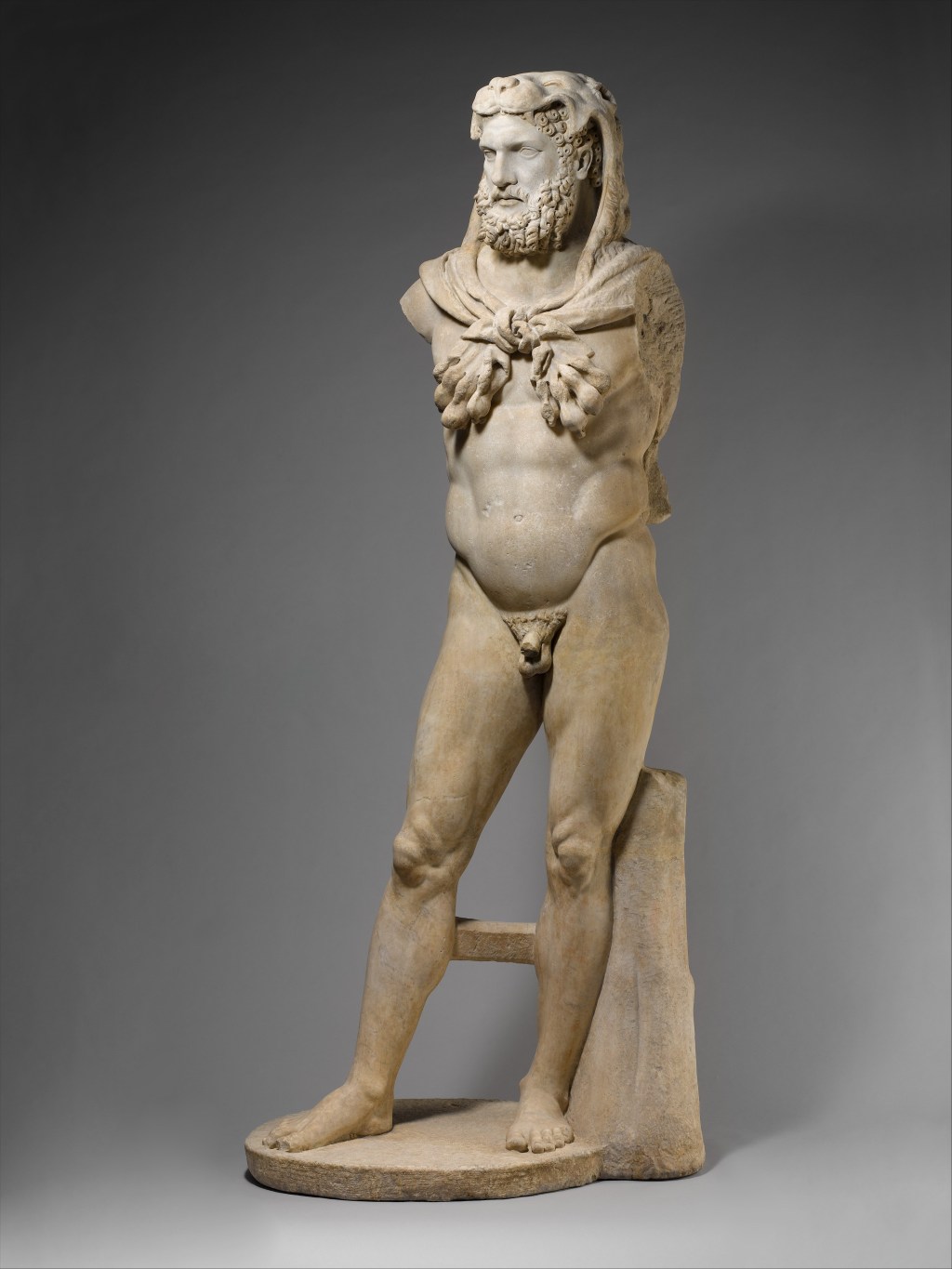
feels like staring at the broken armed statue
of Hercules in The Met.
How at first glance, he is the creator,
the defender, the hero of the earth,
bound in infinity, stark naked and unafraid
of the sharp teeth of the world–the worlds,
dangling around him like the once hungry flames of
the dead cigarettes piled in the ash trays of
the scorching house.
But you wonder if that lion head wrapped around his skull
is not a crown made from a defeated beast
but a shawl of death marking the numbered days
of the strongest hero among us.
Hercules stands there armless,
limbless, tall and ancient,
yet feeble.
He postures humble, stoic strength,
like a white birch on the edge of collapse,
the rot so entangled within its core,
that its branches leap off in pining evacuation
and gather like empty beer cans in the dust of antiquity.
But maybe, you think, that old power is somewhere
in the dusty thing you look at slouched before you.
Maybe that old strength is still in those limbs that
used to move with the strength of the marble mountains
they were so long ago carved from.
But your living room isn’t The Met,
it’s too cold and smells like sweat and grease,
not poise and intellect,
and you can’t hear the many languages
of eager tourists viewing Greco-Roman works.
All you can hear is the tired sonorous snoring
of a man who isn’t formidable enough
to sit all the way up in the arm chair.
 No Poet Peach